Carrier Oil Experiments: Using Pure Cold-Pressed Pumpkin Seed Oil as Beard Oil
Sean
Reviewing beard care products for a year has really gotten me interested in the variety of ingredients different brands use in their products. So much so that I decided to try some of the individual ingredients on their own. This will give me a better understanding of how they work and the effect they have on my beard. I am hopeful this will improve my ability to review products. The first ingredient I decided to try individually is Pumpkin Seed Oil, a well-known and popular carrier oil.
Pumpkin Seed Oil
A few of my current favorite beard oils use Pumpkin Seed Oil. All three varieties of the Honest Amish beard oils, for example, list pumpkin seed oil as an ingredient.
As the name implies, pumpkin seed oil is derived from pumpkin seeds, sometimes called pepita seeds. It is known for its deep moisturizing qualities and is a common ingredient in many beard oil formulations. Since my current favorite oils all use pumpkin seed oil, it seemed like a good carrier oil to start with.
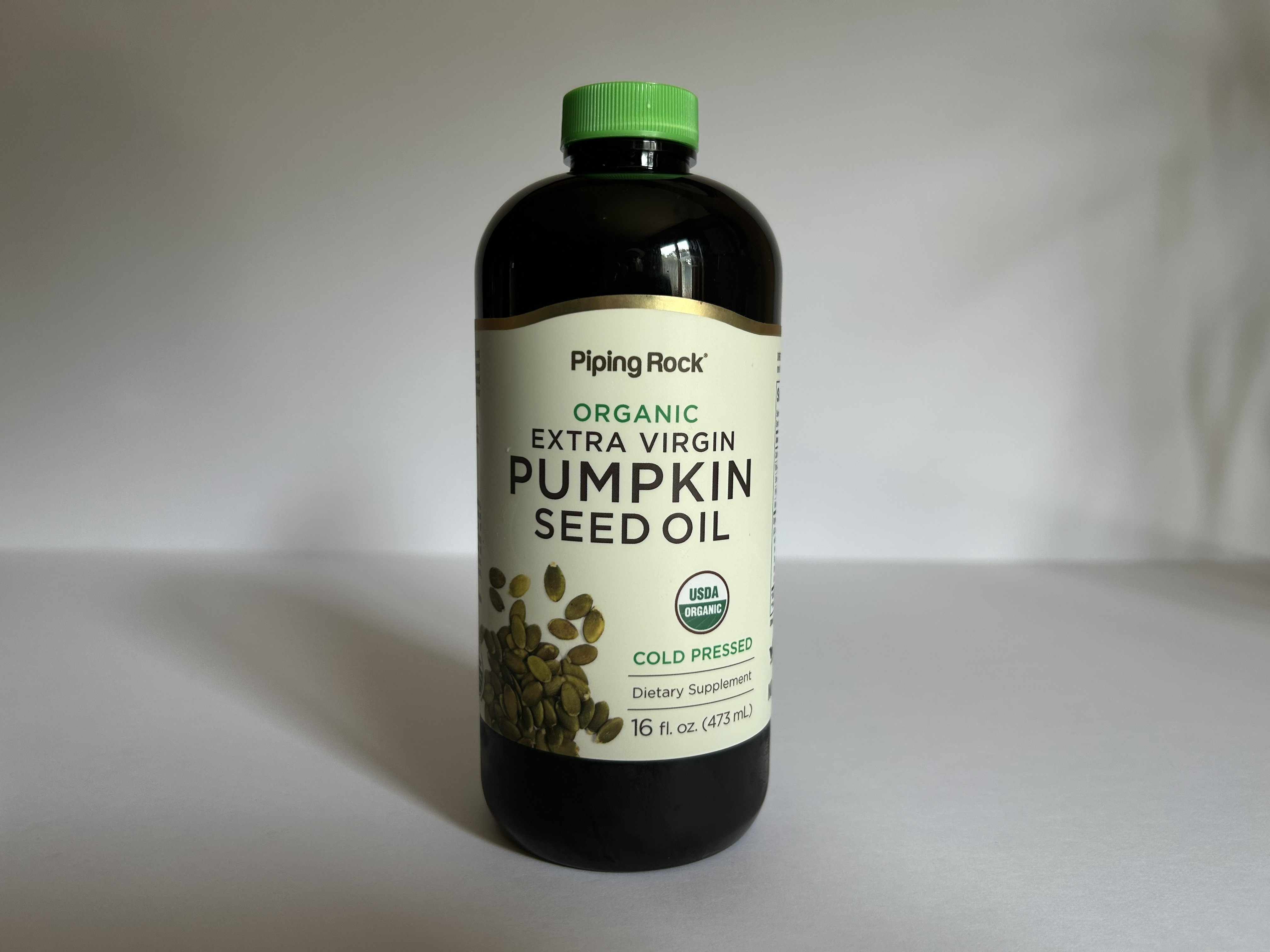
Piping Rock Pure Cold-Pressed Pumpkin Seed Oil - 16 oz Bottle
I decided to buy a 16 ounce (473ml) bottle of cold-pressed pumpkin seed oil from Piping Rock. The 16 oz bottle cost $22.52 after shipping and taxes. The bottle should last about three to six months if stored properly. 16 oz is a lot of oil. So, I do plan to try some different uses for it to get the most out of my purchase. The primary reason I bought it, though, was to test alone as an oil for my beard.
This is not a review of Piping Rock’s pumpkin seed oil. I am just documenting the results of my single-carrier-oil experiment, and Piping Rock is the brand that I chose for the experiment. The oil itself seems to be very good quality.
Storage
Piping Rock recommends the oil be stored in the refrigerator after opening. Pumpkin seed oil contains high amounts of natural vitamin E, which acts as an antioxidant. Unlike beard oil formulations, however, a pure oil has no additional antioxidants added to prevent oxidation. Storing the oil in the fridge is recommended to prolong the life of the oil. This presents a problem though, as cold oil shouldn’t be applied to a beard. So, I bought some 1 oz amber glass bottles with droppers to store a portion of the oil in a closet, away from heat and sunlight.
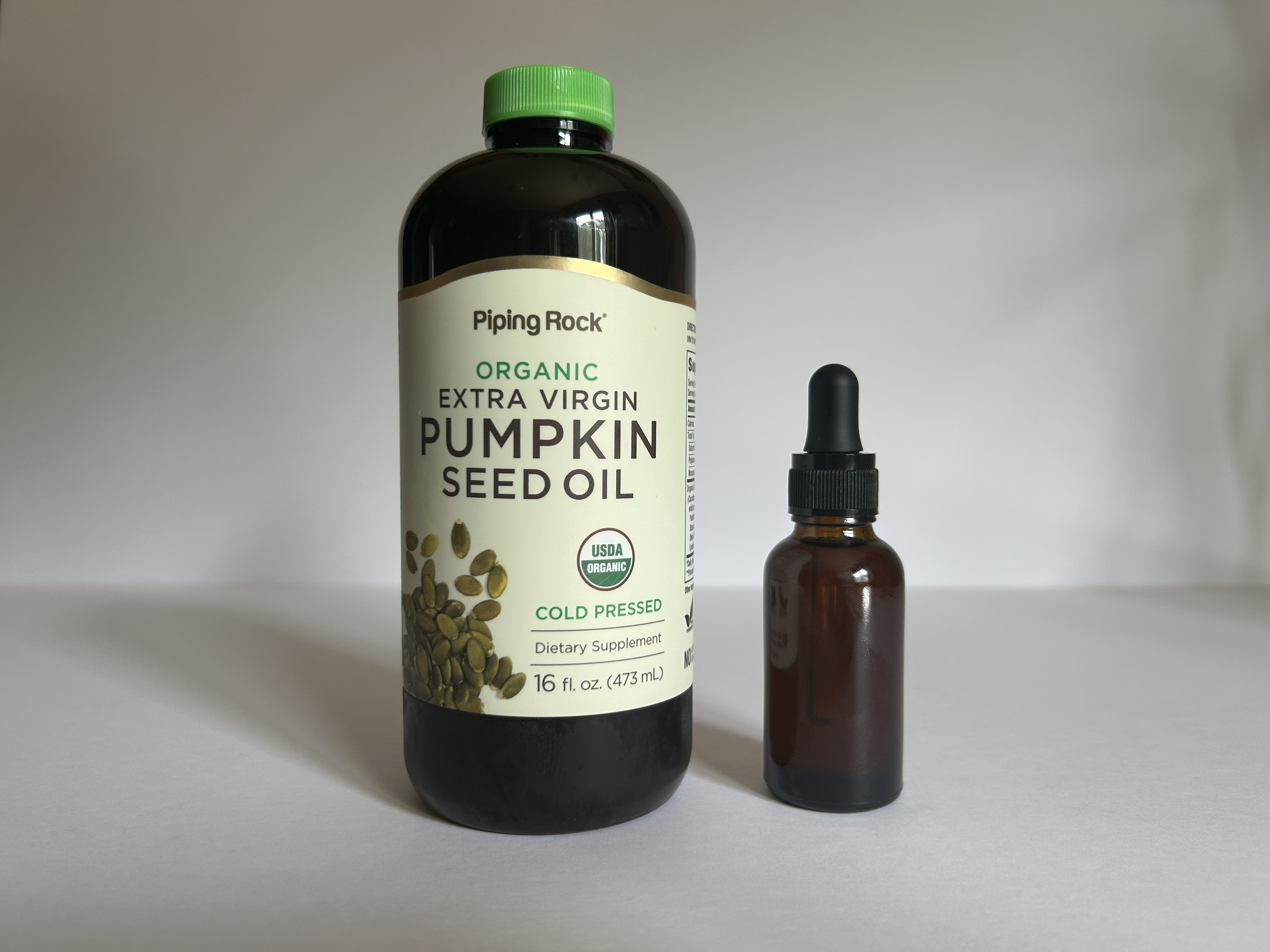
Piping Rock Pure Cold-Pressed Pumpkin Seed Oil and Dropper Bottle
While maybe not ideal, I usually keep my beard oils in the bathroom closet. This is enough to keep them in a cool location out of direct sunlight. I have found that the heat from the bathroom is not really an issue. My oils typically last one to two years, which is the normal shelf life for beard oil. However, for the pumpkin seed oil experiment, I am keeping the small, non-refrigerated bottle in a closet in the hallway, where my wife was already storing the essential oils she uses for her projects.
Application
Reminder: Always do a patch test before trying a new product on your skin.
I applied the pumpkin seed oil mostly in the same way I do any other commercially available beard oil product. That is, once or twice a day, usually shortly after showering, while my beard is still damp. This moisturizes the skin underneath my beard and the beard hair itself. Then lightly brush with a boar bristle brush to evenly distribute the oil.
Always apply beard oil to a damp beard.
One change I did make was to only use two to three drops of the oil per application. I typically use four to five drops of beard oil, but I found that two to three drops of the pure pumpkin seed oil was usually enough.
With any beard product, it’s best to start with a small amount first. Usually a little goes a long way. Then increase the amount if needed on subsequent applications. This helps avoid the uncomfortable situation of having too much product in your beard.
The pumpkin seed oil has a nutty scent at first, but it dissipates after about 20 minutes and leaves no noticeable scent in my beard.
Towards the end of the experiment, I was back up to using 3 to 5 drops. You can read why in the next section on my results.
My Results
After about three days, I noticed something interesting. My beard hair felt noticeably stronger to me. However, it also felt dry a few hours after applying the pumpkin seed oil. I wouldn’t have expected these two results to occur at the same time, but that was my experience.
Other than the dryness, my hair felt very strong and healthy a few days after using the pumpkin seed oil alone. So, my experience with this very non-scientific and very non-controlled study was that pumpkin seed oil made my hair feel stronger.
Because it’s a very common question, I’ll note that pumpkin seed oil did not seem to increase or promote beard hair growth for me. It just made the hair that already grows feel stronger and healthier.
So, my hair seemed stronger to me, but because this dryness was uncomfortable, especially at night, I decided to end the test using the pumpkin seed oil alone after roughly three days.
I used the pumpkin seed oil along with a beard balm I already own for another four days. Making seven days total. The balm helped keep my beard from drying out again, and my beard hair still felt stronger during the pumpkin seed oil test. I intended to test pure pumpkin seed oil for much longer, but given the results from the three days of the oil alone, plus the extra four days with the oil + balm, I decided to end the test. I don’t really like applying balm on top of oil.
Final Thoughts
Can pure, cold-pressed pumpkin seed oil be used alone as a beard oil? Yes. It might even work very well for some hair types. However, I personally found that pumpkin seed oil alone was not a good fit for me, as my hair felt dry again a few hours after application. However, it did feel to me like it strengthened my beard hair, which likely explains why I like products that use pumpkin seed oil along with other ingredients.
I hope you found this carrier oil experiment useful. I learned much more about how pumpkin seed oil works for me. I plan to continue testing individual carrier oils periodically in the future. I may test some carrier oil blends as well. I plan to focus on testing individual oils, but I still need to do something with the 16 oz of pumpkin seed oil I bought. Fortunately, there are other uses for pumpkin seed oil.